Why Developers and Builders Need Global Community Connections
Developers who connect with community leaders build solutions people actually need. Global connections create feedback loops that turn ideas into adopted tools.
Heart is ready when you are.
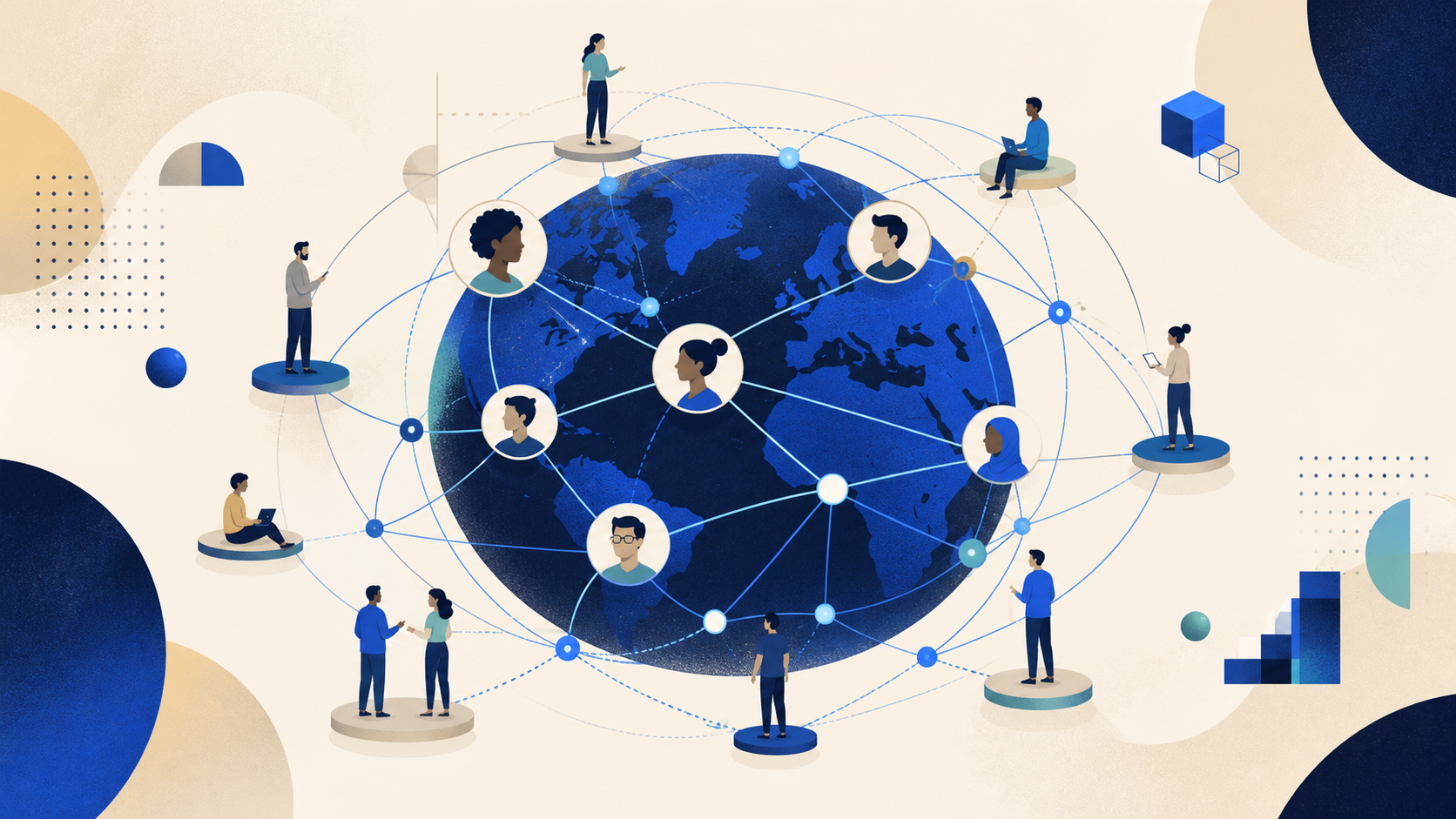
Developers who connect with community leaders build software that solves real problems instead of imagined ones. These connections create a feedback loop that turns generic platforms into purpose-built tools communities actually adopt.
Why should developers connect with community leaders worldwide?
Developers who connect with community leaders build solutions people actually need. This direct connection prevents the most common failure mode in software: building something technically impressive that nobody uses.
Global connections expose builders to real problems across different contexts. A community challenge in Lagos looks different from one in London or Los Angeles, but the underlying needs often overlap. Developers who understand these variations build more flexible, valuable tools.
Community leaders provide direct feedback loops that improve software quality. They see where tools break down under real-world use. They know which features members ignore and which ones drive engagement. This ground-truth information beats focus groups and user surveys every time.
These connections turn generic tools into purpose-built solutions. Consider a developer building a community platform who connects with leaders across three continents. Through these conversations, she discovers that most community tools assume stable internet connections and fail gracefully when connectivity drops. Leaders in emerging markets repeatedly mention this gap. She builds offline-first architecture into her platform from the start, solving a problem she would never have encountered working in isolation.
The networking effect compounds over time. Each conversation reveals new contexts, edge cases, and opportunities. Developers stop guessing what communities need and start building what they ask for.
What value do builders bring to communities in the AI era?
Builders who understand communities create AI tools and platforms that multiply community management capacity. They automate repetitive tasks without eliminating the human connection that makes communities work.
The shift from "developers" and "founders" to "builders" reflects broader skill sets needed today. Builders package solutions as apps, AI agents, AI skills, and platforms. They think in systems and workflows, not just code. They understand when to build custom software and when to connect existing tools.
Close community connections help builders understand which automation helps versus hurts engagement. AI can draft personalized welcome messages, but communities die when members only interact with bots. Builders who spend time in actual communities learn this distinction. They build automation that handles logistics so community leaders can focus on meaningful interactions.
Value flows both ways in these relationships. Communities get better tools designed for their specific challenges. Builders get validation and direction before investing months in the wrong solution. This reciprocal relationship creates better outcomes than either group achieves alone.
How do community managers find the right tools to scale?
Community managers need curated app stores and platforms designed specifically for their role. Generic software marketplaces bury community-specific solutions under enterprise collaboration tools and social media schedulers.
Generic software marketplaces don't surface community-specific solutions. A community leader searching for member engagement tools finds project management software, CRM systems, and marketing automation platforms. These tools solve adjacent problems but miss the core needs of community management.
Community leaders need tools across several categories: member engagement platforms that foster connection, event management software that handles virtual and in-person gatherings, content distribution systems that reach members where they already spend time, analytics that measure real engagement instead of vanity metrics, and AI automation that handles routine tasks without replacing human interaction.
The connection between builders and managers ensures tools solve actual bottlenecks. When community leaders can directly request features or report problems to builders, software evolves to match real workflows. Tools get better faster.
A marketplace approach helps managers discover solutions other community leaders already tested. Social proof matters in software selection. Knowing that similar communities successfully use a tool reduces risk and shortens evaluation time.
What happens when builders share solutions across communities?
Shared solutions accelerate growth across the entire ecosystem. One community's custom solution becomes another's ready-made tool, eliminating months of development time.
Network effects make shared tools more valuable over time. More communities using a tool means better feedback and faster iteration. Builders spot patterns across multiple use cases and build features that serve everyone. Edge cases get caught and fixed before they affect most users.
Sharing solutions reduces redundant work. Communities stop building the same thing from scratch. Instead of ten communities each spending weeks creating a welcome sequence automation, one builder creates a tool all ten can use. Those communities redirect saved time toward member engagement and program development.
Shared solutions create standards and interoperability between communities. When multiple communities use compatible tools, members who participate in several communities encounter familiar interfaces. Data export and import becomes possible. Communities can learn from each other's analytics and strategies.
How can developers and community leaders build better networking loops?
Regular connection points between builders and community leaders create continuous value for both groups. These aren't one-off conversations but ongoing relationships that improve software and community operations simultaneously.
Builders should embed in communities they serve, not just survey from a distance. Lurking in community channels, attending events, and watching real interactions reveals needs that members can't articulate in feedback forms. This immersion builds intuition about what matters.
Community leaders should share operational challenges openly, not just feature requests. The real bottleneck might not be a missing feature but a workflow that doesn't match how communities actually function. Open sharing helps builders understand context behind requests.
Platforms that facilitate these connections reduce friction. App stores for community tools, forums where builders and leaders discuss challenges, and directories that help both groups find each other all strengthen the networking loop. These platforms turn random connections into systematic relationship building.
Super connectors play a key role linking builders to multiple community contexts. These individuals understand both technical possibilities and community needs. They translate between worlds and spot patterns across ecosystems.
The AI era requires faster feedback loops. Software evolves weekly, not yearly. Communities adapt constantly. Regular connections between builders and leaders match this pace, ensuring tools stay relevant as needs shift.
Frequently asked questions
Why should developers talk to community leaders before building tools?
Developers who connect with community leaders build solutions people actually need instead of technically impressive software nobody uses. These connections reveal real problems across different contexts and create feedback loops that turn generic platforms into purpose-built tools communities adopt.
What's the difference between a developer and a builder?
Builders have broader skill sets than traditional developers—they package solutions as apps, AI agents, skills, and platforms rather than just writing code. They think in systems and workflows, understanding when to build custom software versus connecting existing tools, which matters more in the AI era.
How do shared community tools create network effects?
When multiple communities use the same tool, builders get better feedback and can iterate faster by spotting patterns across use cases. This eliminates redundant work—instead of ten communities each building the same feature from scratch, one builder creates a tool all ten can use and improve together.