How Communities Will Create Human Value at Scale by 2030
Communities will create value at scale by combining trusted human relationships with tools that improve connection, operations, and outcomes.
Heart is ready when you are.
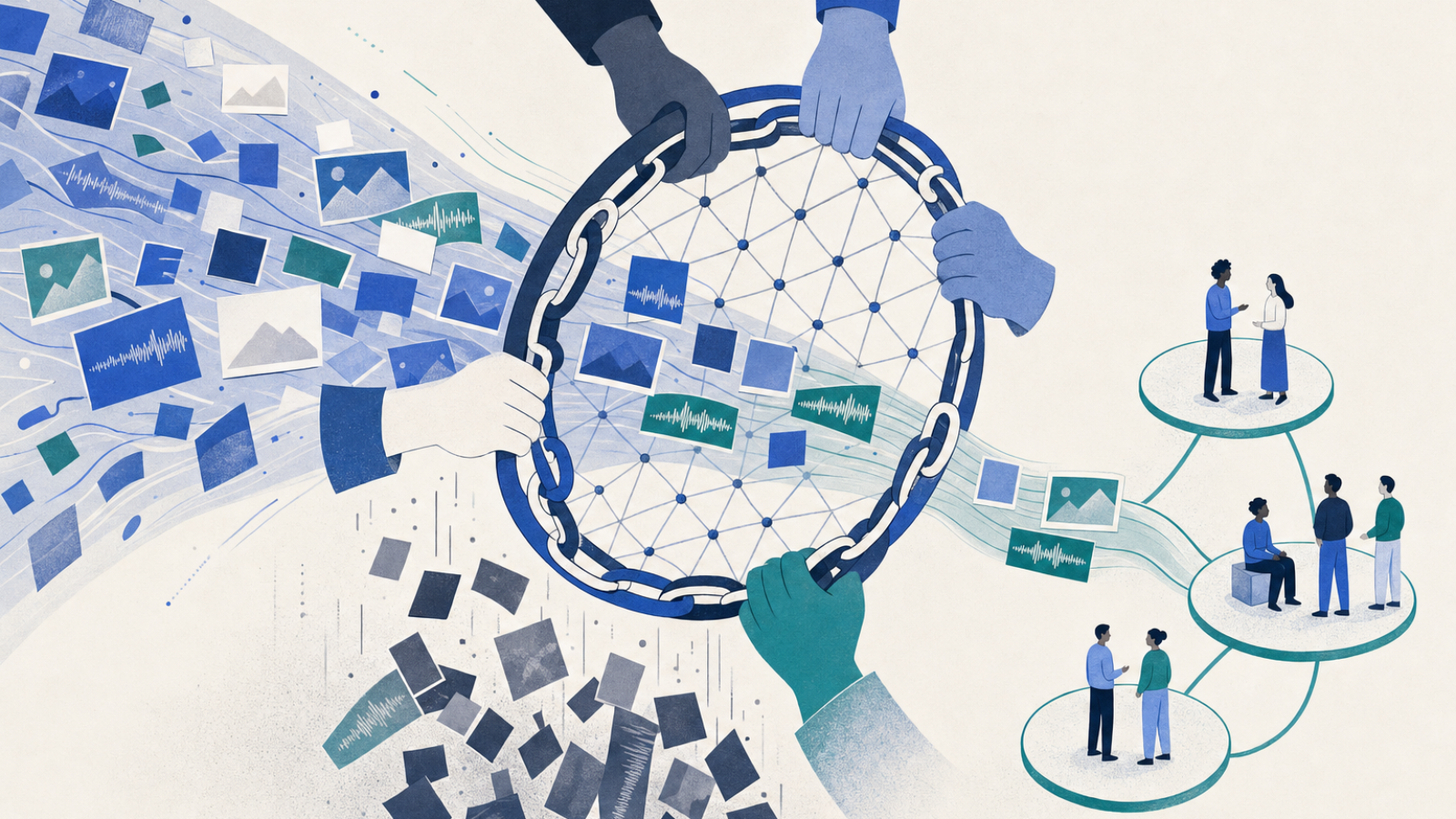
Community will matter more in the AI era because people still need trust, belonging, and human judgment. As content becomes easier to produce, relationships will become a stronger signal of what deserves attention.
Why will community matter more in the AI era?
Community will matter more because people need trust, belonging, and human judgment when AI makes information easy to create.
AI can produce convincing text, images, audio, and video in seconds. This increases the amount of useful content, but it also increases noise. The [Reuters Institute Digital News Report 2024](https://reutersinstitute.politics.ox.ac.uk/digital-news-report/2024) found that 59% of people were concerned about knowing what is real and fake in online news.
Trusted relationships help people decide what to believe, use, and share. Advice from a respected peer carries context that a search result does not. Members know who has relevant experience, who understands their situation, and who has earned trust over time.
Community also meets needs that information alone cannot meet. People want to learn with others, contribute to a shared purpose, receive recognition, find collaborators, and get support during hard periods. These needs are becoming more urgent. In 2025, the [World Health Organization reported](https://www.who.int/news/item/30-06-2025-social-connection-linked-to-improved-health-and-reduced-risk-of-early-death) that one in six people worldwide experiences loneliness.
This does not mean every online group creates value. Healthy communities need clear norms, active care, useful participation, and a reason to exist. The groups that provide those things will become important anchors in an uncertain digital environment.
What will communities look like between 2026 and 2030?
Communities will become more focused, connected across borders, and shaped around clear member outcomes.
Large audiences will still exist, but passive reach will matter less than useful participation. More groups will form around a profession, location, identity, interest, industry, or shared mission. Their strength will come from relevance, not raw member count.
People will also belong to several connected communities. A builder may take part in a local startup network, a professional peer group, an industry association, and a global mission-led community. No single platform will hold every relationship or meet every need.
Global reach and local context will work together. Shared infrastructure can connect members across borders, while chapters, ambassadors, peer groups, and regional leaders adapt the experience. Local leaders understand language, customs, policy, and economic conditions that a central team may miss.
AI will support this structure. It can improve discovery, translation, summaries, moderation, and member matching. It can make large networks easier to navigate. People must still set the culture, judge sensitive situations, and decide which connections are worth making. Trust cannot be assigned to an algorithm.
Which community tools will create the most value?
The best tools will help leaders understand members, make useful connections, share knowledge, and measure outcomes.
Community technology will become less about hosting a feed and more about completing core jobs. The most useful tool categories will include:
- Member discovery and onboarding: Help people find the right group and understand how to take part.
- Directories and matching: Show relevant skills, needs, interests, and relationship context.
- Messaging and events: Support timely conversation and meaningful participation.
- Knowledge systems: Capture useful answers, resources, and member experience.
- Moderation and safety: Help leaders enforce norms and respond to harmful behavior.
- Community operations: Manage workflows, permissions, programs, records, and reporting.
Connectors need more than a contact list. They need to know how people are connected, what each member can offer, what support they need, and when an introduction could help. Timely prompts are useful when they bring this context forward without making the decision.
Community managers need tools that reduce repetitive work. Routine reminders, tagging, scheduling, notes, and reporting can be automated. Welcomes, conflict resolution, recognition, and sensitive outreach should still feel human. Good workflows create more time for care rather than automating every interaction.
Ecosystem builders have wider needs. They may work across accelerators, investors, universities, public agencies, companies, and local groups. They need shared ecosystem maps, partner records, opportunity tracking, and evidence that collaboration is producing results.
An app marketplace gives leaders another path. Instead of forcing every community into one large platform, they can select focused apps that fit their members, operating model, and stage of growth. A modular tool stack can change as needs change.
How can community leaders keep human connection at the center?
Leaders can protect human connection by using technology for support while keeping care, judgment, and relationship building human.
The highest-value leadership actions are deeply personal. They include welcoming members, making thoughtful introductions, recognizing contributions, resolving conflict, and setting clear norms. Technology can reveal where these actions are needed, but it should not pretend to perform care.
A connector uses a member directory to notice that a climate founder needs manufacturing advice. The connector introduces the founder to an experienced operator, explains why the match may be useful, and follows up after their call.
The directory made the need visible, but the connector supplied judgment and trust. The result can also be measured through the response time, whether the meeting happened, whether the advice helped, and whether further collaboration formed. That creates clear value without replacing the human role.
Leaders should avoid engagement tricks that increase activity without improving outcomes. Excessive notifications create fatigue. Automated outreach can damage trust when it acts like a personal message. Metrics such as posts, reactions, and time spent can reward noise.
A healthy community does not need members to be active every day. It needs them to know where to turn when they can help or need support.
How can ecosystem builders scale a global community responsibly?
Global scale works when shared systems support local leaders instead of controlling them.
A federated model provides common standards, reusable tools, and a shared identity while keeping key decisions close to members. The central team can maintain infrastructure and safety rules. Regional leaders can shape programming, partnerships, and communication for local needs.
Responsible global growth must account for translation, accessibility, time zones, cultural differences, data privacy, member safety, and unequal access to technology. A mobile-only process may exclude some members. A meeting schedule may favor one region. A rule that works in one culture may cause confusion in another.
Governance should be clear before the network grows. Members and leaders should know who owns their data, who can access it, how decisions are made, and how conflicts are handled. Local teams also need a fair way to challenge central decisions.
Sustainable scale depends on people who maintain the network. Connectors, moderators, ambassadors, and chapter leads carry relationships across boundaries. They need training, useful tools, recognition, and fair rewards. Treating this work as invisible volunteer labor will limit growth and increase burnout.
The goal is not to make every chapter identical. It is to provide enough shared structure for trust and collaboration while leaving room for local judgment.
What should community leaders do now to prepare for 2030?
Leaders should define the value they create, audit their tool stack, and measure outcomes that matter to members.
Start by mapping the member journey from discovery and onboarding through connection, contribution, leadership, and renewal. Identify where people get stuck, where operators repeat manual work, and where important relationship context is lost.
Then review every tool. Remove duplicate systems and unused features. Add an app only when it solves a clear member or operator problem. Check how data moves between tools and who can access it.
Measure results that show whether the community helps people move forward. Useful measures include:
- Helpful introductions made
- Response time to member needs
- Repeat participation
- Member contributions
- Collaborations formed
- Member goals achieved
These measures connect operations to real outcomes. They also help leaders improve without chasing empty activity.
Use technology to increase the reach of human care, not to remove humans from community.
Frequently asked questions
Why will communities matter more as AI grows?
Communities will matter more because trusted relationships help people judge what is credible, useful, and relevant. They also provide belonging, support, recognition, and human judgment that AI-generated information cannot replace.
Which community tools will be most useful by 2030?
The most useful tools will improve member discovery, matching, messaging, events, knowledge sharing, moderation, and operations. They will reduce repetitive work while leaving introductions, conflict resolution, recognition, and sensitive outreach to people.
How can community leaders prepare for 2030?
Community leaders should map the member journey, remove weak or duplicate tools, and add apps only when they solve a clear problem. They should track outcomes such as helpful introductions, collaborations formed, repeat participation, and member goals achieved.