How Startup Communities Give Members Access to AI Tools and Global Growth
Startup communities provide AI tools, global developer connections, and sponsor discounts that help founders build faster and scale globally.
Heart is ready when you are.
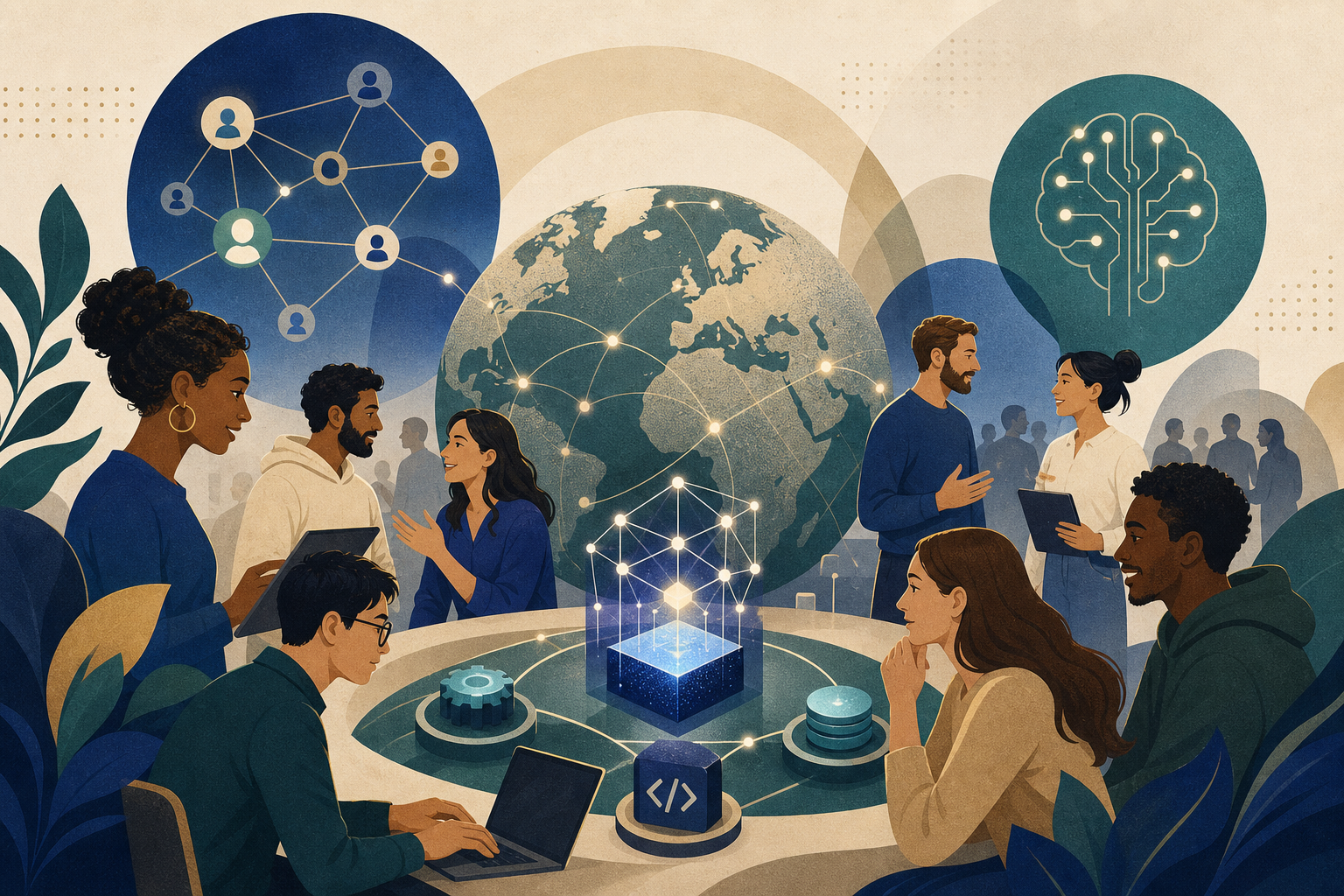
Startup communities give founders three things that directly affect how fast they can build: access to AI tools that solve specific problems, connections to developers who can build the technology, and sponsor partnerships that provide free or discounted services. These resources turn a solo founder into someone with a global support system.
What resources do startup communities provide to help founders scale?
AI tools, developer connections, and sponsor discounts. Communities curate access to AI agents designed for specific startup challenges, connect founders directly with geeks and builders who can help develop technology, and negotiate partnerships with sponsors who offer free or heavily discounted tools for early-stage companies.
Consider a founder building a SaaS product who needs cloud infrastructure but has limited cash. Through a community like Startup Grind, she gets $100,000 in Google Cloud credits, connects with a developer in Eastern Europe who helps optimize her database, and gains access to an AI agent that handles first-tier customer support. Without the community, those three resources would have cost her months of runway or simply remained out of reach.
How do AI agents help startups solve problems faster?
AI agents automate repetitive tasks and provide expert guidance on demand. Customer support bots handle common questions 24/7. Code review agents catch bugs before they reach production. Market research tools analyze competitor pricing and feature sets in minutes instead of days.
The challenge for founders is figuring out which AI tools actually work. Communities solve this by vetting and recommending AI skills built specifically for startup needs. Members share what works and what wastes time. Many communities also negotiate early access to emerging AI tools through partnerships with the companies building them.
The time savings add up quickly. Founders can focus on decisions that require human judgment while AI handles the repetitive work. A support bot doesn't replace the need to understand customer pain points, but it does free up hours each week that would otherwise go to answering "How do I reset my password?"
Why do global developer connections matter for startup growth?
Access to talent, technical knowledge, and different market perspectives. Communities bridge the gap between founders who need technology built and geeks who can build it. These connections span time zones and markets, giving startups exposure to users and feedback from different regions.
Global networks create collaborative problem-solving that speeds up development. A founder in Austin can post a technical challenge before bed and wake up to solutions from developers in Bangalore or Warsaw. This around-the-clock collaboration compresses timelines.
Learning from builders in other ecosystems also prevents costly mistakes. Someone in Berlin might have already solved the regulatory challenge a founder in Toronto is facing. Someone in Singapore might have tested a growth strategy that failed, saving others from repeating it. These connections turn individual lessons into collective knowledge.
What perks do community sponsors offer to early-stage startups?
Free trials, discounted pricing, and extended credit programs. Sponsors provide tools that would otherwise cost thousands of dollars per month. Cloud hosting credits, design software licenses, payment processing fee waivers, and access to legal services all become available through community partnerships.
Startup Grind pioneered this model at scale. Their sponsors include companies like Google Cloud, HubSpot, Stripe, and AWS, each offering significant perks to community members. A typical member might receive $100,000 in cloud credits, waived transaction fees for the first year of revenue, and free access to marketing automation software.
Sponsors offer these benefits because they want early relationships with promising startups. A company that starts on Google Cloud as a tiny team might stay there as it grows into an enterprise customer. The early discount builds loyalty and locks in platform choice before the startup has budget to comparison shop.
These perks let founders test technology before committing budget. Trying three different payment processors with no upfront cost means making better decisions about which one fits best.
How does Startup Grind help members scale globally?
Local chapters in 125 countries plus sponsor benefits worth thousands of dollars. Startup Grind built a network of city-based chapters that host monthly events, then layered sponsor partnerships on top. The result is global infrastructure that serves local startups.
The sponsor network alone provides substantial value. Google Cloud credits, HubSpot marketing tools, Stripe fee waivers, and dozens of other perks combine into a package that would cost an early-stage startup $150,000 or more if purchased separately. Members access these benefits while connecting with founders in their city and in chapters worldwide.
This dual structure solves a real problem. Local chapters provide the in-person connections that help founders find cofounders, first customers, and advice specific to their market. The global network provides exposure to how startups in other countries approach similar challenges.
A founder in Lagos can attend a local event to meet Nigerian entrepreneurs, then jump on a video call with someone in São Paulo who built a similar product. Both the local context and global perspective matter.
What should founders look for in a startup community?
Curated AI tools, active developer networks, and tangible sponsor benefits. Communities that vet tools save founders from analysis paralysis. Instead of evaluating 50 different customer support platforms, founders can start with the three that other members actually use and recommend.
Look for communities with global reach but local chapters. The combination provides both in-person relationships and access to knowledge from other markets. A community that exists only online misses the value of face-to-face connection. A community that's purely local limits exposure to different approaches.
Check if sponsors actually serve early-stage needs rather than just enterprise customers. Free trials of enterprise software often require implementation help that a three-person startup can't afford. The best sponsor perks are tools that startups can activate and use immediately.
Active connector members matter as much as the tools and discounts. Communities where experienced founders and ecosystem builders make introductions between members create opportunities that don't exist in passive networks. The person who introduces a founder to the right developer or first customer provides value that no AI tool or sponsor discount can match.
Frequently asked questions
What free tools do startup communities give you?
Startup communities provide access to cloud credits (often $100,000+), discounted SaaS tools like HubSpot and Stripe, and vetted AI agents for support and automation. These perks come through sponsor partnerships that communities negotiate on behalf of members, giving early-stage founders tools that would otherwise cost thousands per month.
How do AI agents actually help founders save time?
AI agents automate repetitive startup tasks like customer support, code reviews, and market research. A support bot handles common questions 24/7, freeing up hours each week that founders can spend on decisions requiring human judgment. Communities vet which AI tools actually work, saving founders from testing dozens of options.
Why join Startup Grind specifically?
Startup Grind offers local chapters in 125 countries plus sponsor benefits worth $150,000+ including Google Cloud credits, HubSpot tools, and Stripe fee waivers. You get in-person connections with founders in your city while accessing global knowledge from members worldwide, solving both local context and international perspective needs.